Gathering the Evidence: Continuous Product Discovery

A O'CALLAGHAN • November 6, 2025

By Alan O'Callaghan

I love who-dunnits. If I’m resting at home in the evening watching TV, unless there’s a compelling football match to watch, I’ll probably watch crime fiction: anything from Midsomer Murders (1) to Sherlock (2). If I’m reading a novel, or listening to one on my Audible account, then the odds are it will be a murder mystery. In some stories the murderer is known at the beginning (think Columbo (3)) and the fun lies in the chase. But my favourite kinds are the ones where clues appear incrementally, there are red herrings and distractions all over the place as the evidence accumulates, and the race is on for the viewer/reader/listener to solve the murder before the fictional detective does.


Agile product development has some similarities with whodunnits. At the beginning there is not enough information to come up with a solution we can be confident in. Significant effort has to be put in to gathering evidence. Some actions will need to be taken before all the necessary information is to hand. The solution emerges over time, based on the evidence. Agile product development is driven by continuous product discovery.


Simpler Days

Twentieth century mass production was simpler. There was an upfront period of product exploration in which a potential solution was designed. Once finished, this phase was followed by a rather longer period of product exploitation in which the aim was to maximize output and, of course, sales. The difference in twenty first century production, where the rate of change keeps rising exponentially, is that the ‘exploration’ phase extends into the ‘exploitation’ phase. Product discovery continues even after product delivery starts. Potentially, it lasts until the product is sunsetted.


Managing Risks

Managing a Product Backlog in the face of unrelenting change involves the management of a number of risks. The most important of these is the value risk: the risk that the organization’s customers won’t buy the product or service. Either it doesn’t sufficiently address their pains, or it doesn’t offer enough significant gains to engage their interest. The continuous delivery of valuable increments, and the feedback from the customers they enable, is the most powerful tool available for managing that risk. Provided, of course, that the feedback is acted upon. In between releases, Sprint Reviews provide a forum for stakeholders and customers to collaborate with the Scrum Team about the increment they just developed. The underlying idea is that many, perhaps most, of the assumptions that we have at the beginning of the development cycle may turn out to be wrong. Incremental delivery, coupled with iterative development, provides a product team with the evidence that either validates or invalidates those assumptions.


Another risk is the usability risk. Customers might like the product’s concept and appreciate its potential for making their lives better, but if the product becomes too complicated or difficult to use they are likely to walk away from it sooner or later. Usability experiments are similarly likely to last through most of the product’s life cycle and, as with the value risk, the best evidence is the feedback from incremental product releases.


The other two big risks are feasibility and viability. Can the organization actually build the product with the resources (materials, technology, skillsets, financial etc.) available to it? And, even if the product can be built, can the organization support it in the market? For example, does the organization’s existing business model support it, or if that model needs changing, is that possible to the degree necessary?

The continuous management of these risks is the very essence of product discovery, but the feasibility risk can be raised if continuous delivery is the only way in which they are managed. Iterative development means rework, and it consumes the resource that is typically the most expensive: engineering. If engineering work gets continually discarded the cost of development may rise to the point where it outweighs the benefits. A good Product Owner will always be open to necessary reworking of the product but will want to keep it to a minimum by gathering as much evidence as possible before her team starts sprinting. The feasibility and viability risks in particular should be largely mitigated before development starts.


Discovery Techniques

The goal in product discovery should be to validate our ideas in the fastest, cheapest way possible. Different discovery techniques are available for different kinds of products, but prototyping is an approach that can be applied in most contexts. The fundamental purpose of any kind of prototype is to learn something at a much lower cost in terms of time and effort than building out a product – even an MVP. A good prototype is a powerful force for collaboration in the product team, helping its members to think more deeply about the risk(s) it is addressing.


The feasibility risk can be typically mitigated through one or more spikes – quick and dirty throwaways developed in timeboxes of no more than a day or two by a pair of Developers. Just enough of the product is created to mitigate the risk – a small percentage of the effort that might be required of an MVP – which might be a performance issue, a scalability concern, or the use of a technology or a third-party component the team has not used before.

The viability risk can be addressed through the use of a Business Model Canvas. Developed by Strategyzer.com the Business Model Canvas can be thought of as a giant canvas divided into nine panels. The central panel is for the Value Propositions. To its right are three panels to do with customers: Customer Segments, Customer Relationships and Channels. To the left are another three panels: Key Activities, Key Resources and Key Partners. Two panels below the other seven deal with Cost Structure and Revenue Streams. In a workshop stakeholders populate these panels with stickies and then collaborate to refine the visualisation of their business model. Easily accessible, the model easily reveals whether a new value proposition sits neatly within the existing business model or challenges it.


Mitigating the value risk should always be done in front of real customers. But a Product Owner doesn’t have to wait for the first release or even the first Sprint Review to begin that process. GV – formerly Google Ventures – uses what it calls Design Sprints to address key value risks before it decides to invest in companies. A Design Sprint – not to be confused with Scrum’s term for a development iteration – lasts five days in which a throwaway prototype is built and shown to a small group of five or more real customers for feedback. Famously they built a fake version of a robot for Savioke to test assumptions about how hotel guests and staff would react to an automaton that delivered room service in hotels. Only after the prototype passed this test did Savioke go into production of the real thing.

 Prototypes that address the usability risk are simulations that can range in their fidelity from low (interactive wireframes, for example, that address just one dimension of the product’s usability) to high (close-to-real interfaces but which use low-fi data rather than live data). Typically, low-fi prototypes are used to identify the workflow required before development starts while hi-fi prototypes are used to build usable increments before an actual release which uses live data.


Rapid Experimentation

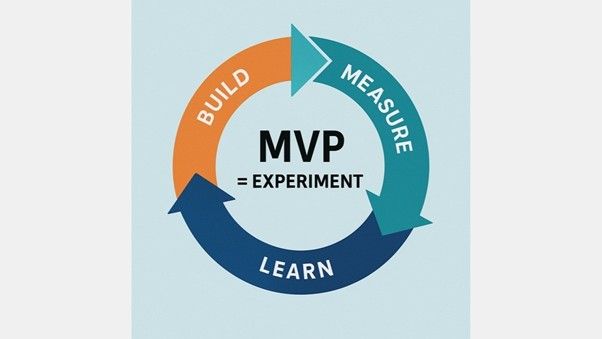
Different techniques are available for mitigating the various risks, but the key is to remember that whether using a prototype, a simulation or releasing an increment, the team is always performing experiments. The Product Owner uses rapid experimentation throughout the life of the product to discover the features that will maximize the value to the customer while at the same time benefitting the organization. Sister Boniface (4) is not a bad role model for a Product Owner to follow.


 (1) Misomer Murders. ITV series. 1996-present day

(2) Sherlock. BBC series. 2010-11

(3) Columbo.NBC series.1971-78

(4) The Sister Boniface Mysteries. BBC studios and BritBox series. 2022-2024


First published on LinkedIn October 16th 2025
By A O'CALLAGHAN November 7, 2025
By Alan O'Callaghan
By A O'CALLAGHAN November 7, 2025
By Alan O'Callaghan
By A O'CALLAGHAN November 7, 2025
By Alan O'Callaghan
By A O'CALLAGHAN November 6, 2025
By Alan O'Callaghan
By A O'CALLAGHAN November 6, 2025
By Alan O'Callaghan
By A O'CALLAGHAN November 6, 2025
By Alan O'Callaghan
By A O'CALLAGHAN November 6, 2025
by Alan O'Callaghan
By A O'CALLAGHAN November 6, 2025
by Alan O'Callaghan
By A O'CALLAGHAN February 26, 2024
A Case Study of the Use of AI in Learning for Agile
By A O'CALLAGHAN May 24, 2022
In 1897 Mark Twain famously complained that reports of his death were exaggerated. A hundred and twenty five years later the reports of the death of Agile similarly abound, and are just as far off the mark. In fact, according to the Business Agility Institute, Business agility – defined by the BAI as “…a set of organizational capabilities, behaviors, and ways of working that affords your business the freedom, flexibility, and resilience to achieve its purpose. No matter what the future brings.” – has increased globally in a very significant way since the start of the pandemic. Other respected authorities, McKinsey, for example, have noted a rush towards Agile ways of working as a consequence of organizations finding flaws and dysfunctions in their existing structures, cultures and processes that hinder their ability to respond to unanticipated change. One wellspring of the rumours of the death of Agile has actually been from well-known Agilists such as Dave Thomas who were actually pointing out that big consultancies have jumped on the Agile bandwagon and corrupted its meaning and intent. Way too many organizations have swallowed the snake oil that suggests Agility is about adopting a few practices in the product development area to become “faster, better, cheaper” while changing nothing else. Agile has always been about responsiveness to change while delivering products that delight customers: “faster, better, cheaper” are second order effects of lowering the cost of change. These are not obituaries, but passionate warnings about the need to defend the values and principles of Agile. A Post-Agile World? A different, but insidious and dangerous perspective comes from those who contrast Business Agility with Agile product development. To the extent that the term “Business Agility” focuses on the need for organizational-wide cultural and structural change, it reflects a welcome shift in an understanding of the challenges businesses face in every sector of the world economy. On the other hand, these are not new problems. The pandemic, supply chain disruption, the ‘Great Resignation’ and even the war in Ukraine have only exacerbated and revealed more clearly the need equip organizations to respond to change and to innovate more quickly. Changing the world of work has always been at the heart of genuine Agile thinking and practice. Yet we are welcomed to the ‘Post-Agile World’ by the authors of one acclaimed book. An Agile Straw Man The book concerned, by Fin Goulding and Haydn Shaughnessy is called Flow . First off, it’s a good book. I recommend it. It is full of interesting ideas to promote cultural change throughout a business. I love their concept of extreme visualization, of work as a learning model, of the need to co-create processes and so on. I see these as valuable additions to our understanding of Agile. But they do not. At one point in the book, they post a table that compares Flow with Lean Startup and with Agile. Agile is summarized in eight bullet points. But their ‘Agile’ is a straw man – easy to knock over because it’s not the real deal. Let’s look at those eight bullet points: “A structure for software programming”. While it is true that Agile took off in software development, it didn’t start there, and it won’t finish there. Most commentators trace Agile thought and practice back to the Shewhart cycle first promoted in 1929. Today, Saab build fighter aircraft, Tesla make autonomous cars, GKS develop pharmaceuticals and the EduScrum movement is transforming education using Agile approaches. “An a priori project-planning method”. I’m not sure where that one came from. One of the four values of the Agile Manifesto is about valuing “responding to change over following a plan.” Agile planning is data-driven. We plan on what we know rather than speculate. But in a complex world we don’t have all the information up front and some of that will change in any case. Scrum, for example has a planning event at the beginning of every iteration precisely because a priori planning doesn’t work. “Risk reduction”. Quite true. But as the authors contrast this with ‘Management of uncertainty’ in their own framework I think they have misrepresented ‘risk reduction’ in Agile as meaning ‘risk avoidance’. In reality, risk is identified and promoted in importance so that it can be dealt with early in Agile development. “Fixed process”. Just a second while I pick myself up from the floor. I’ve spent 25 years explaining to those I have coached or trained in Agile that ‘the process’ is merely the sum total of all the decisions a self-organizing team makes. As such it is adaptive and will be different for each and every team. Predefined processes are a death march in the face of uncertainty and risk. They are anathema to Agile. “Emphasis on avoiding big failures”. Again, I see here an attempt to draw Agile as a conservative risk-aversive approach compared to Flow. Once again, this is a nonsense. Agilists have always advocated “fail fast; embed the learning” as the only way to succeed in a volatile, uncertain, complex, and ambiguous world. ‘Big failures’ are avoided by the emergent behaviour of running safe-to-fail experiments that either validate assumptions or prove them wrong. Agile teams are empowered to take whatever actions the results of such experiments suggest to them. “More supervisory roles”. What are they then? A Scrum Master for example is a servant leader – the very opposite of a supervisory role. A Product Owner has some independent authority but is a peer member of a Scrum team. There is no rank amongst a Scrum team’s developers. As the eleventh Principle Behind the Agile Manifesto says, “The best architectures, requirements, and designs emerge from self-organizing teams” (emphasis added). Self-organization is defined as order which arises through frequent, local interactions rather than being directed externally. You need a peculiar form of mental gymnastics – standing on your head and turning your insides out maybe - to translate that into the idea that Agile requires more supervisory roles “Fulfills the plan”. See the discussion on ‘a priori planning’ above. Finally: “Execution method”. No! To be truly self-organizing, Agile teams have to take ownership of business goals and objectives. The very reason for having a Product Owner in a Scrum team, for example, is so that her business domain knowledge and experience is available to the team as a whole. A Scrum team’s purpose is to deliver business value. That makes it a genuine business unit, not just an execution/implementation unit. How the team achieves its goals and objectives is entirely up to the team itself. Agile Teams vs Business Agility In their blatant mischaracterization of Agile, Goulding and Shaughnessy have taken the caricature of Agile dreamed up by the “faster, better, cheaper” school of thought and put it on steroids. I suppose when you launch any new product you’ll feel the need to differentiate it from ‘competitors’, but in this case the authors of Flow are in danger of undermining the drive towards Business Agility. Many organizations need to heed the words of Nancy Sinatra: ”You keep saming when you oughta be changing”(These Boots Are Made for Walking). The question is what to change? And more specifically, what to change next? Some people like to think of the recent history of Agile as consisting of three waves: first, team Agile (single team product development); second, scaled Agile (multi-team product development) and third, Business Agility. Karim Harbott in his book, The 6 Enablers of Business Agility, describes it that way. That’s fine and good, provided you don’t think that in this so-called third wave the need to invest in Agile teams is somehow in the past. Karim doesn’t think that by the way. In general, it is clear that organizational and cultural change require leadership. But successful transformations cannot be purely top down, and often do not start that way. My friend Jim Coplien often says of empowerment that power is never given, it is always taken. Most Agile transformation drives to date have been bottom-up. Development teams sit in the heart of the value stream of the organization. The products or services they create are what deliver value to the customer. No-one is in a better position to see how existing hierarchies, processes and compliance demands get in the way. No-one is in a better position to understand which impediments and dysfunctions are the most important to remove next. It is not as if, in the so-called ‘first wave’, the vision of empowered self-organizing teams was universally achieved (even in many companies who thought they had adopted Agile). If anything, the influence of frameworks like Safe and DAD in the so-called ‘second wave’ took us all a step backwards. Scrum Masters and Agile coaches will continue to have to fight to increase the space within which self-organizing teams can operate. The measurement of success with Business Agility can only be the value delivered to customers. Business Agility cannot be achieved without continuous investment in self-organizing Agile development teams. Let no-one tell you anything different.